THERMOGRAPHY
The team at APEC Inspection specialise in Thermographic testing and inspection across Australia.
About Contact UsThermography (TT)
APEC Inspection - Australia's Experts in Thermography (TT)
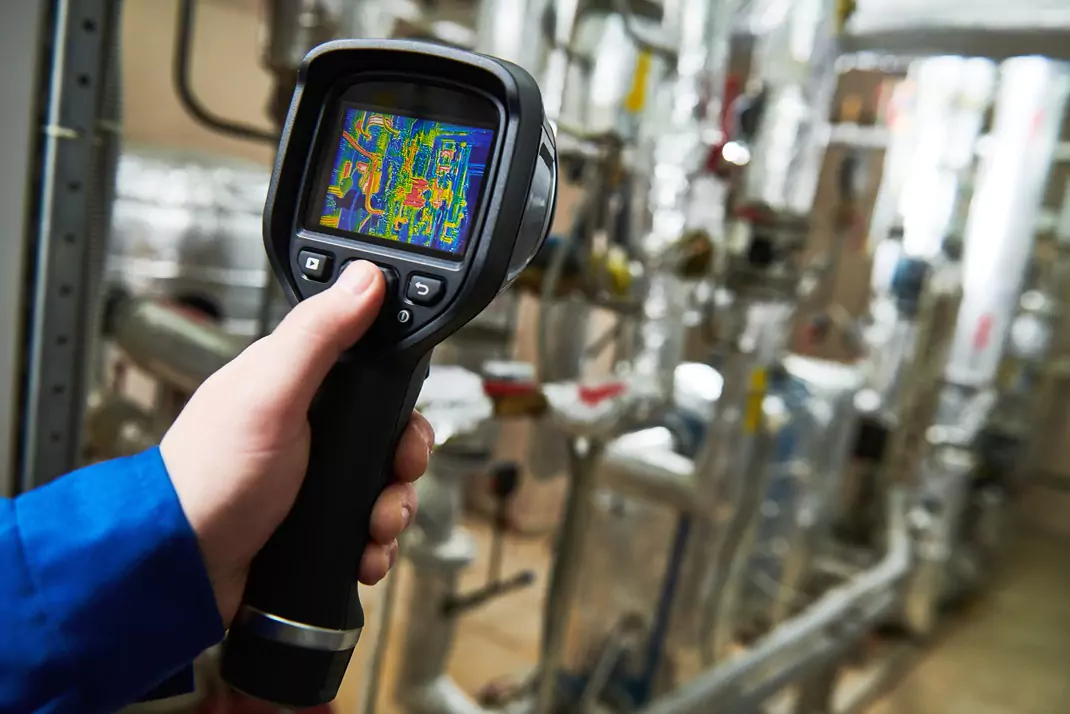
Thermographic testing and inspection is a form of nondestructive testing which generally uses thermal imaging to detect surface inconsistencies in materials, but can also refer to temperature-sensitive coatings applied to the surface that measure the surface temperature of parts or materials. Infrared thermography is a non contact method that identifies thermal energy and patterns.
APEC Inspections can provide you with the following TT - Applications:
For hard-to-reach assets, thermographic cameras can be deployed via our drone inspection service to capture thermal data at height or across large areas. Thermography is also effective at identifying insulation breakdown and coating defects, working alongside our coating inspection services.
Request A Quote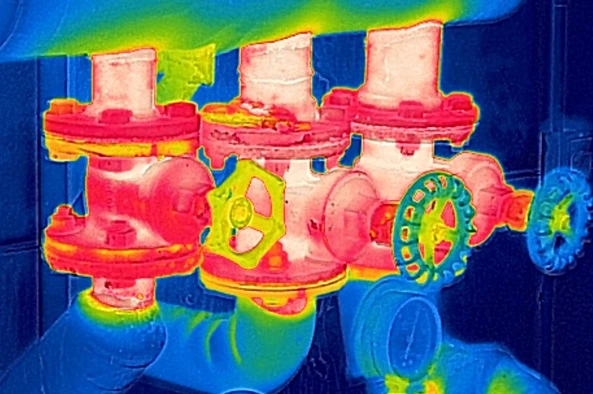
What Infrared Thermography Is
Infrared thermography is a non-contact method that reads the surface temperature pattern of equipment with an infrared camera. Everything radiates heat, and the camera turns that radiation into an image where hot and cool areas show up clearly. The point is simple: differences in heat reveal faults you cannot see by eye. A connection that is starting to fail, a bearing that is dragging, a patch of wet insulation behind cladding — none of these look any different under a torch, but they all run at the wrong temperature, and that is what the camera picks up.
How It Works and What Shows Up
On the electrical side we find loose or corroded connections and overloaded circuits running hot, often well before anything trips or smells. On rotating plant the camera flags mechanical faults such as failing bearings, motors and couplings, where friction shows up as a hot spot. We also pick up refractory and insulation breakdown on furnaces, boilers and lines, where heat is escaping through a thinning or damaged lining. On buildings the survey reveals moisture and missing insulation in the envelope, and on tanks and vessels you can read liquid levels off the temperature change at the surface. It is a broad method, which is part of why it earns its place in a maintenance program.
Why It Is Done Live and Without Shutdown
Thermography is most useful while the plant is running. Surveys are taken with equipment energised and under load, so you find the fault under real operating conditions rather than a cold snapshot that hides the problem. A high-resistance joint only gets hot when current is passing through it, and a struggling bearing only warms up while the shaft is turning. Catching the fault live also means no shutdown to inspect, which keeps production going and lets us prioritise repairs by how serious the heat reading is.
Combining Thermography With Drone Surveys
For large or high assets we mount the infrared camera on a drone. Roofs, stacks, switchyards, conveyor runs and solar arrays can all be scanned from the air without scaffolding, towers or a confined-space permit. Pairing the survey with our drone inspection service means we cover more ground in a shift and keep people off height, while still getting calibrated thermal data back for the report. Where a fault needs a closer look on the ground, a follow-up visual inspection confirms what the camera flagged.
Standards, Personnel and Reporting
Our thermography is carried out against recognised standards. Condition monitoring and diagnostics of machines follows ISO 18434, and the detection of thermal irregularities in building envelopes follows ISO 6781. Our thermographers hold recognised certification, such as to ISO 18436-7, so the readings are interpreted properly rather than guessed at. For electrical work, the survey supports maintenance under the wiring rules in AS/NZS 3000. Every job comes back as a clear report with thermal and visual images, temperature readings and a plain ranking of what needs attention.
Why Choose APEC Inspection
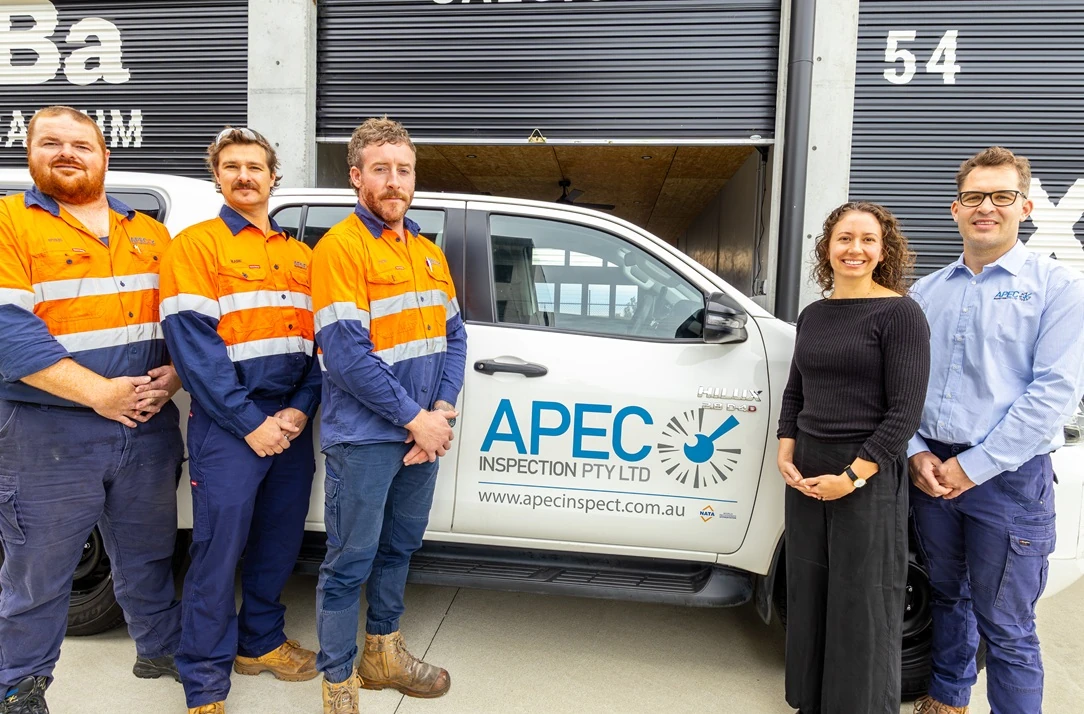
APEC is a NATA-accredited inspection body, and our thermographers work to the standards above and report in a way your maintenance and reliability teams can act on. We mobilise across Newcastle, the Hunter and nationally, and we fit thermography into the wider NDT program your assets already run. To book a survey or talk through a problem you are seeing, request a quote or call the team.
Frequently Asked Questions
- What is thermographic testing used for? +
- It uses thermal imaging to detect surface inconsistencies, pipe blockages, leaking valves, seized bearings, wall thinning, insulation breakdown, and electrical faults.
- Is thermographic inspection a non-contact method? +
- Yes, infrared thermography identifies thermal energy patterns from a safe distance without touching equipment, ideal for live electrical systems and high-temperature assets.
- Can thermography detect insulation problems? +
- Yes, it effectively detects insulation breakdown and wall thinning, identifying areas of deterioration that may lead to corrosion under insulation.
- What electrical faults can thermographic testing identify? +
- Poor terminations, overloaded circuits, loose connections, and failing components, detected by abnormal heat patterns before causing failure or fire.
- Does the plant need to be shut down for a thermographic survey? +
- No. Surveys are carried out while plant is energised and under normal load, which is the only way to see a fault behaving the way it does in service. A connection that runs hot only shows up when current is actually flowing through it.
- Can thermography be combined with drone surveys? +
- Yes. For high or large assets such as roofs, stacks, switchyards and solar arrays, an infrared camera can be flown on a drone to capture thermal data safely and quickly without scaffolding or access equipment.
- What standards apply to thermographic inspection? +
- Condition monitoring of machines is covered by ISO 18434, and thermal irregularities in building envelopes by ISO 6781. Our thermographers hold recognised certification such as ISO 18436-7, and electrical thermography supports maintenance under the wiring rules in AS/NZS 3000.
If You Have Any Query, Feel Free To Contact Us
Whether you'd like a fast quote, have a technical question, or want to schedule a thermographic survey, the APEC team is ready to help.






Guides to thermographic surveys, the standards behind them and condition monitoring.
© apecinspect.com.au. All Rights Reserved. Designed by Peritus Digital. Powered by LYFE AI