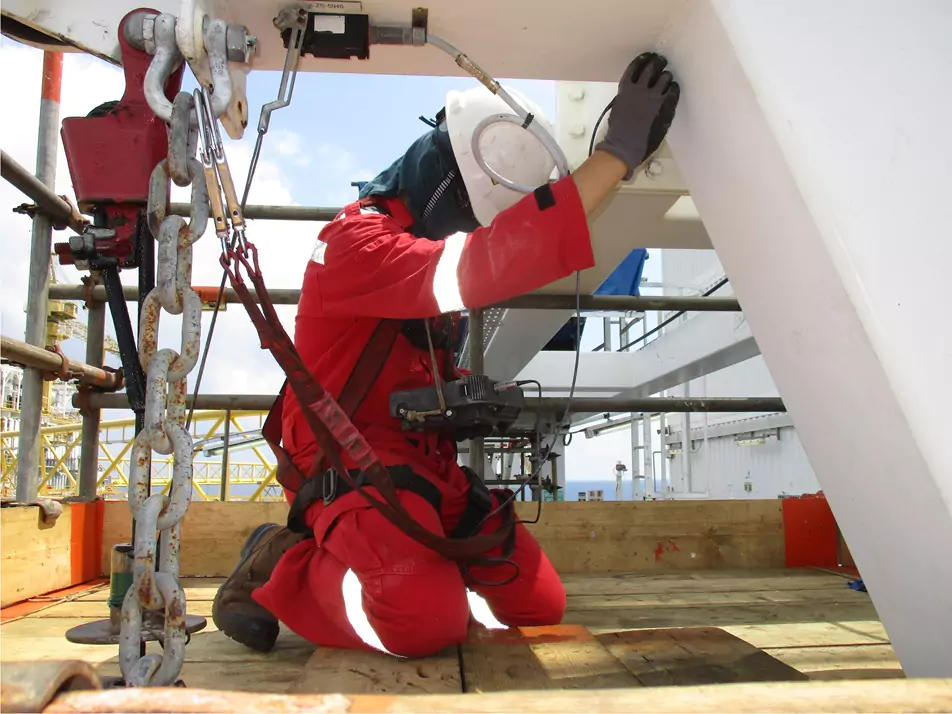
EDDY CURRENT INSPECTION (ECT)
Electromagnetic testing method used in nondestructive testing (NDT)
About Contact UsEddy Current Inspection (ECT)
APEC Inspection - Australia's Experts in Eddy Current Inspection (ECT)
Eddy current testing (ET or ECT) is one of a number of electromagnetic testing methods used in nondestructive testing (NDT). Eddy currents are created through a process called electromagnetic induction, allowing surface and near surface inspection of conductive materials.
APEC Inspections can provide you with the following eddy current testing applications:
What Is Eddy Current Testing?
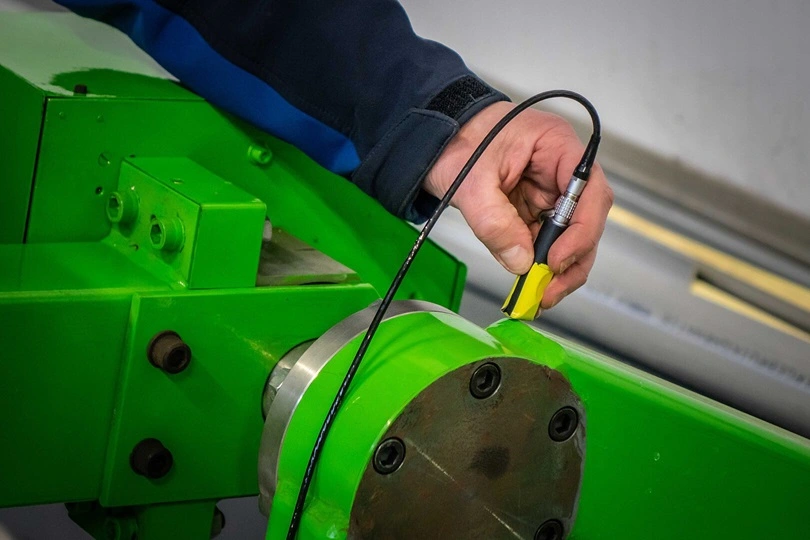
Eddy current testing (ECT) is an electromagnetic NDT method for checking conductive metals. An alternating current is driven through a probe coil, and that changing field induces small circulating currents — eddy currents — in the material below the probe. Any crack, change in thickness, or shift in the metal's electrical or magnetic properties disturbs those eddy currents, and the probe picks up the change as a shift in coil impedance. The inspector reads that signal to find and size the flaw. There is no couplant and nothing is cut or marked, so the part goes straight back into service once the scan is done.
How Eddy Current Testing Works
The probe sits against or just above the surface and the instrument plots the coil response on an impedance plane. A sound area gives a steady baseline; a defect or a change in the material kicks the trace in a direction and to a depth the technician learns to read against calibration standards with known notches and holes. Drive frequency is the main lever — higher frequencies concentrate the currents near the surface for fine crack detection, while lower frequencies push them deeper to pick up wall loss. For tube work, multi-frequency and bobbin or array probes are run through the bore so a long length of tube can be assessed quickly. Because the coil reacts to lift-off as well, the same physics that lets ECT read through paint also means the probe and frequency have to be matched to the job.
Eddy Current Testing Applications
ECT earns its keep wherever a conductive part needs checking without stripping it back. Common work includes surface and near-surface crack detection — often through thin paint or coatings, with no need to remove them first. Heat-exchanger, condenser and boiler tube inspection is a major use, where the method maps pitting, wall thinning and cracking along each tube. Conductivity measurement supports material sorting and heat-treatment verification, picking up mixed alloys or a missed temper before they reach the field. Weld inspection rounds it out, and ECT often runs alongside ultrasonic inspection when volumetric coverage of the weld body is also needed.
ECT vs Magnetic Particle and Penetrant Testing
The big difference is what each method can see and where. Magnetic particle inspection only works on ferromagnetic steels, and dye penetrant only finds flaws that break the surface on a clean part. Eddy current testing handles non-ferromagnetic conductive metals too — aluminium, copper, brass, titanium and austenitic stainless — needs no couplant, and reads through coatings that the other two methods would need stripped off first. It also reaches a little below the surface. The trade-off is that ECT signals take training to interpret and the setup has to be calibrated to the material, so the right choice still comes down to the part in front of you.
Australian & International Standards and Compliance
APEC carries out eddy current testing to the recognised standards for each application: ISO 15549 for the general principles of eddy current testing, ISO 15548 and ASTM E243 for eddy current examination of tubular products such as copper and copper-alloy tubes, and ISO 17643 for eddy current testing of welds by complex-plane analysis. Personnel are certified to ISO 9712 / AS 3998, and APEC is NATA-accredited with AINDT-certified technicians, so the report holds up with clients, regulators and insurers.
Why Choose APEC Inspection for Eddy Current Testing
APEC Inspection is a NATA-accredited inspection body, and our eddy current work is done by AINDT-certified technicians who calibrate to the job and report in plain terms you can act on. We mobilise across Newcastle, the Hunter and nationally, and fit ECT into the wider NDT and pressure vessel inspection programme your plant relies on. To talk through a tube bundle, a coated structure or a sorting job, request a quote or call the team direct.
Frequently Asked Questions
- What is eddy current testing used for in NDT? +
- ECT is an electromagnetic method for surface and near-surface inspection of conductive materials, detecting defects through coatings, measuring thickness, and inspecting heat exchanger tubes.
- Can eddy current testing detect defects through paint or coatings? +
- Yes, ECT can detect surface and near-surface defects through non-conductive coatings such as paint without needing to remove the coating.
- What materials can be inspected with eddy current testing? +
- Any electrically conductive material including carbon steel, stainless steel, aluminium, copper, titanium, and other alloys.
- Is eddy current inspection suitable for heat exchanger tube inspection? +
- Yes, ECT is a primary method for tube inspection in heat exchangers, condensers, and boilers, detecting wall thinning, pitting, and cracking.
- Does APEC Inspection provide ECT services Australia-wide? +
- Yes, our NATA accredited and AINDT certified technicians provide eddy current inspection services across all Australian states.
- What is the difference between eddy current testing and magnetic particle inspection? +
- Eddy current testing works on any conductive metal, including non-ferromagnetic ones like aluminium and stainless steel, and can read through paint and coatings without removal. Magnetic particle inspection only works on ferromagnetic steels and needs a clean surface, so the two methods suit different jobs.
- Which standards does APEC follow for eddy current testing? +
- We work to ISO 15549 for general eddy current testing, ISO 15548 and ASTM E243 for tube inspection, and ISO 17643 for weld examination. Technicians are certified to ISO 9712 / AS 3998.

If You Have Any Query, Feel Free To Contact Us
Whether you'd like a fast quote, have a technical question, or want to schedule eddy current inspection, the APEC team is ready to help.






Blog Category: Eddy Current Inspection
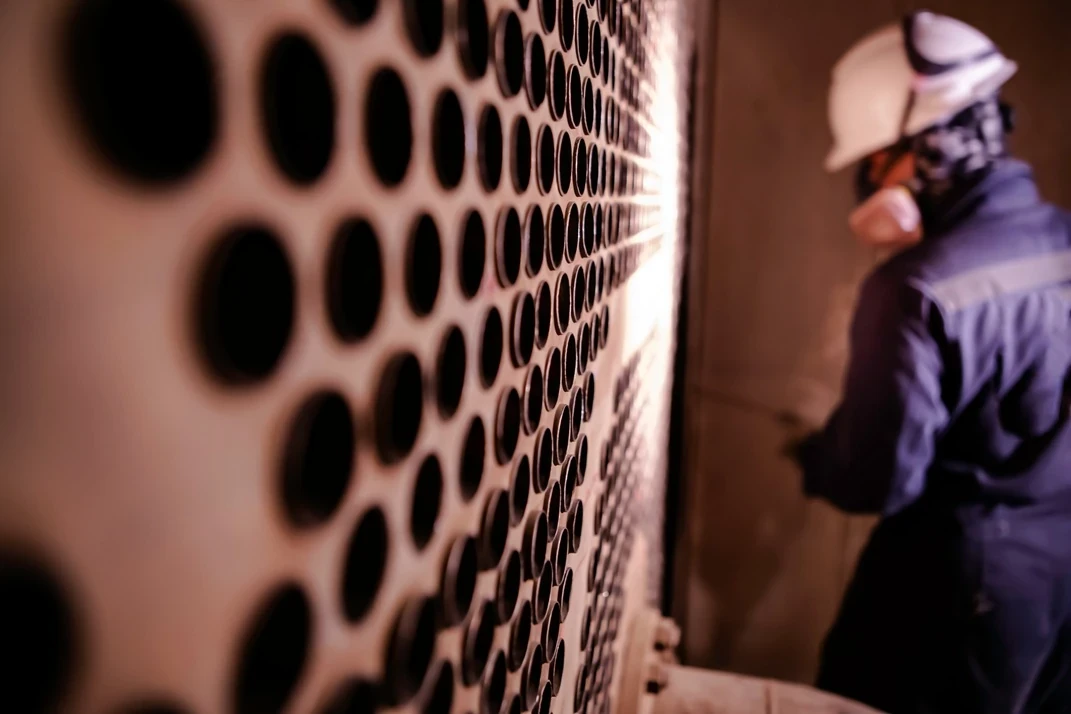
Eddy Current Testing Heat Exchanger Tubes Australia
Learn how eddy current testing for heat exchanger tubes works, where it fits with…
READ MORE →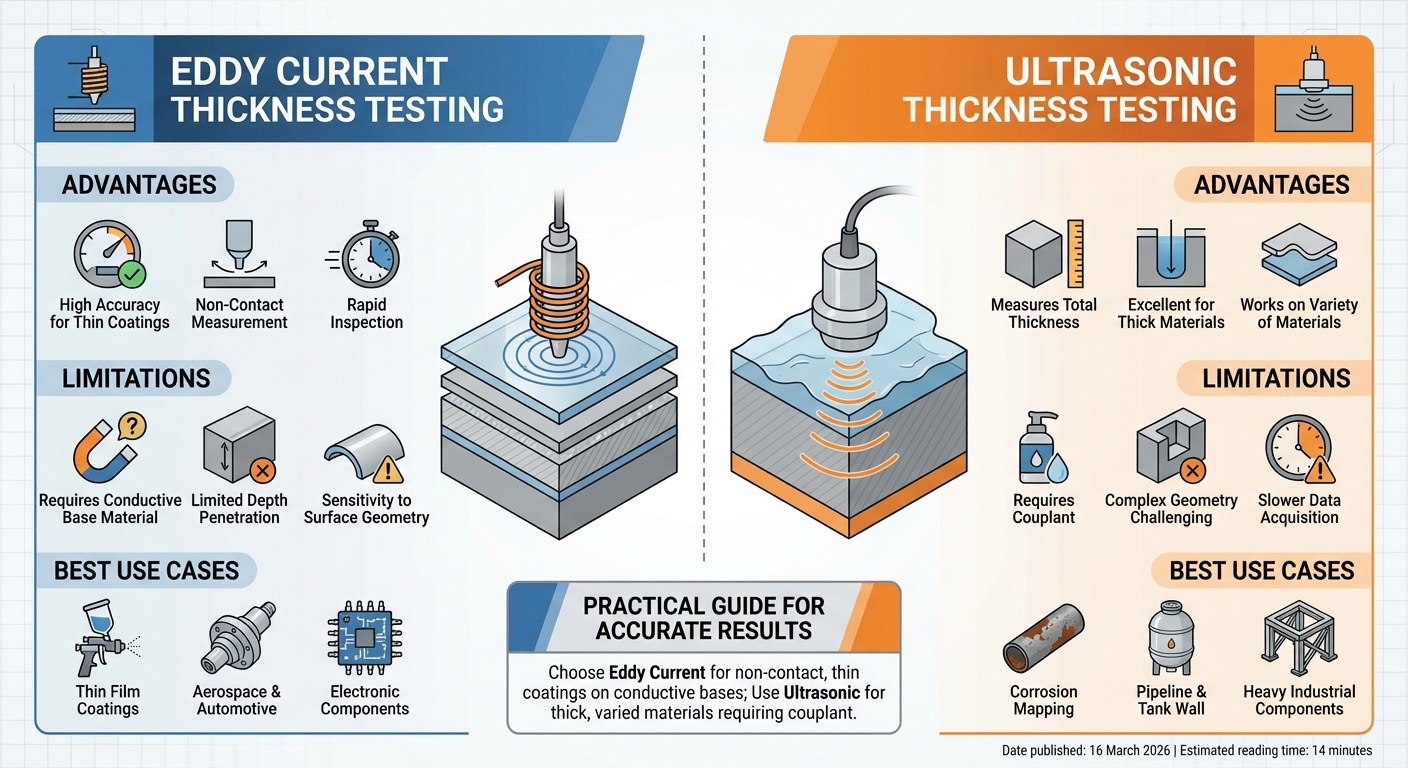
Eddy Current Thickness Testing Guide for Coatings
Learn how eddy current thickness testing works, when to choose it over ultrasonics,…
READ MORE →© apecinspect.com.au. All Rights Reserved. Designed by Peritus Digital. Powered by LYFE AI